Add How-To Geek on Google Add as Preferred Source Follow on Google Discover By Sydney Butler Published Nov 12, 2026, 5:00 PM EST Sydney Butler is a technology writer with over 20 years of experience as a freelance PC technician and system builder and over a decade as a professional writer. He's worked for more than a decade in user education. On How-To Geek, he writes commerce content, guides, opinions, and specializes in editing hardware and cutting edge technology articles. Sydney started working as a freelance computer technician around the age of 13, before which he was in charge of running the computer center for his school. (He also ran LAN gaming tournaments when the teachers weren't looking!) His interests include VR, PC, Mac, gaming, 3D printing, consumer electronics, the web, and privacy. He holds a Master of Arts degree in Research Psychology with a minor in media and technology studies. His masters dissertation examined the potential for social media to spread misinformation. Outside of How-To Geek, he hosted the Online Tech Tips YouTube Channel, and wrote for Online Tech Tips, Switching to Mac, and Helpdesk Geek. Sydney also wrote for Expert Reviews UK. He also has bylines at 9to5Mac, 9to5Google, 9to5Toys, Tom's Hardware, MakeTechEasier, and Laptop Mag. Sign in to your How-To Geek account Summary Generate a summary of this story Like Like follow Follow followed Followed Thread Log in Here is a fact-based summary of the story contents: Try something different: Show me the facts Explain it like I’m 5 Give me a lighthearted recap SSDs (Solid State Drives) were not created in a vacuum. Since these flash-based storage devices had to fill a (literal) gap left by hard drives, it was necessary to create them in a way that bridged the gap between the two technologies.
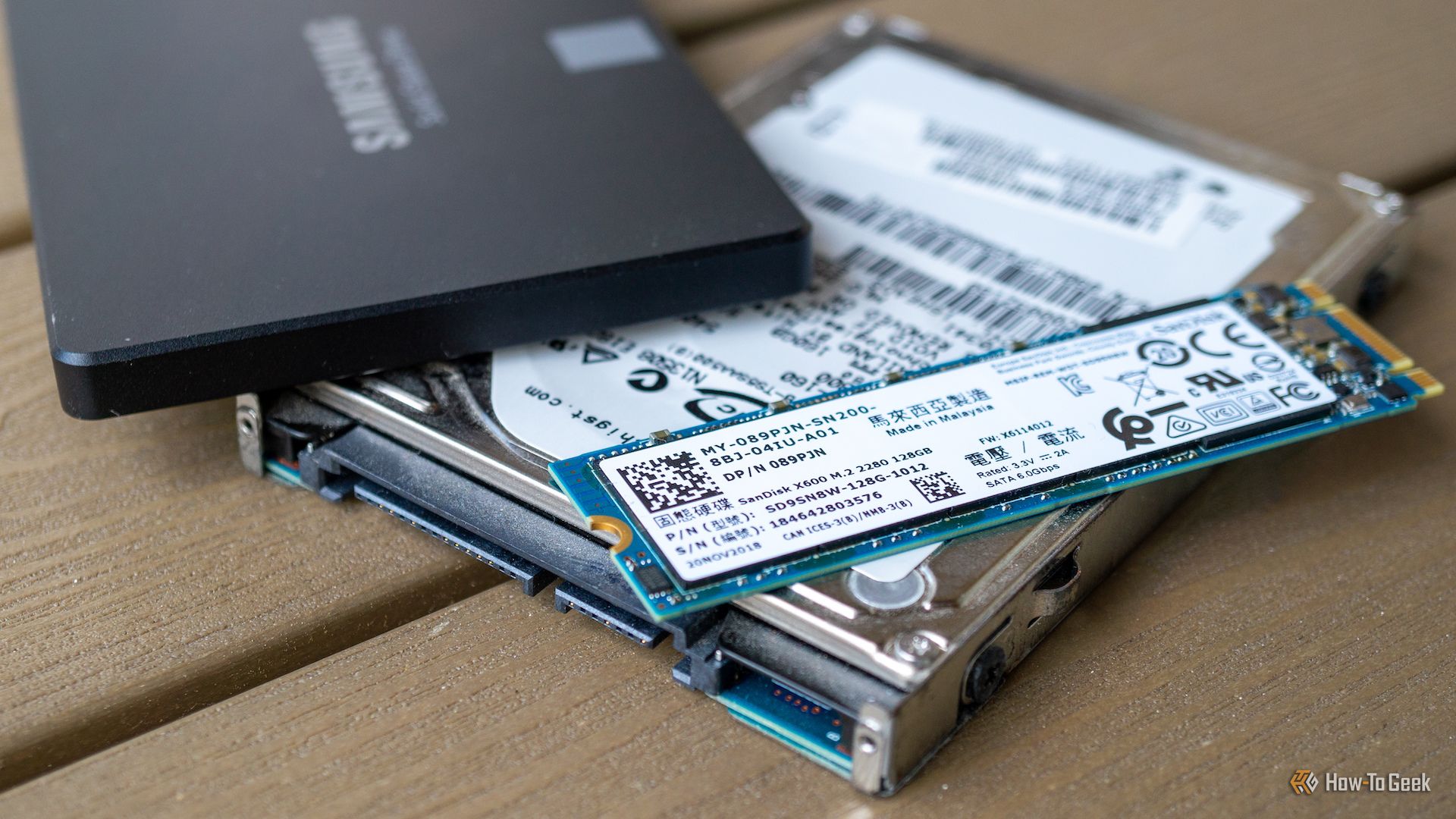
The first widely available commercial desktop SSDs used the same SATA form factor as desktop and laptop hard drives. Even though most of that space was filled with air. Today, we mainly use the M.2 form factor, which takes up only as much space as the SSD needs, but there are still a few HDD leftovers in your SSD soup.
t: ichefboy/Shutterstock.comCredit: Pixza Studio / ShutterstockCredit: mike mols/Shutterstock.comCloseCredit: H_Ko/Shutterstock.comCredit: kckate16/Shutterstock.comCredit: ichefboy/Shutterstock.comCredit: Pixza Studio / ShutterstockCredit: mike mols/Shutterstock.com On an SSD formatted with GPT, the first logical block contains data that only applies to mechanical hard drives. There are still fields for the starting and ending cylinders, head, and sectors. These coordinates point to specific locations on a mechanical drive, but mean nothing to an SSD.
While the fields are still there, they are now filled with dummy data. This hasn't been left in due to laziness or anything. Firstly, we still use mechanical hard drives, and will probably keep using them for decades to come. So the data does still have a purpose when you format those drives. Secondly, keeping the drive format consistent maintains backward compatibility with drive utilities, even old ones. As long as they understand the format, they can read the SSD.
On a mechanical hard drive, there's a translator module that maps the LBAs (Logical Block Addresses) that the operating system uses as a reference for data location to specific spots on the hard drive's platters. In other words, there's a direct correlation between the LBA address and the physical location of the data.
In a modern SSD, we still use LBAs, and the OS still addresses the SSD using the same system, but the FTL (Flash Translation Layer) keeps tabs on where the data physically resides. That's because there's no 1:1 connection between the LBA and data location. The SSD controller may decide to change the location of data as part of optimization or wear leveling. The interesting bit here is that the logical sector size as well as the sector numbering scheme are leftovers from mechanical drives that aren't technically needed in an SSD.
When SSDs first hit mainstream computers, there wasn't a special SSD connection standard like we have today in the form of the M.2 slot. The first commercial SSDs needed to be a drop-in replacement for mechanical hard drives, and those hard drives used the SATA interface and fit into the same drive bays that mechanical drives already used.
While there is such a thing as a 3.5-inch SATA SSD, the 2.5-inch form factor became dominant in the consumer space. It's easy enough to adapt a device designed to mimic a 2.5-inch laptop hard drive into a 3.5-inch bay, and it didn't take long for desktop PC cases to offer 2.5-inch drive bays out of the box. Laptops, however, can't accommodate the larger size, so it makes perfect sense that the 2.5-inch laptop form factor became the SATA SSD standard.