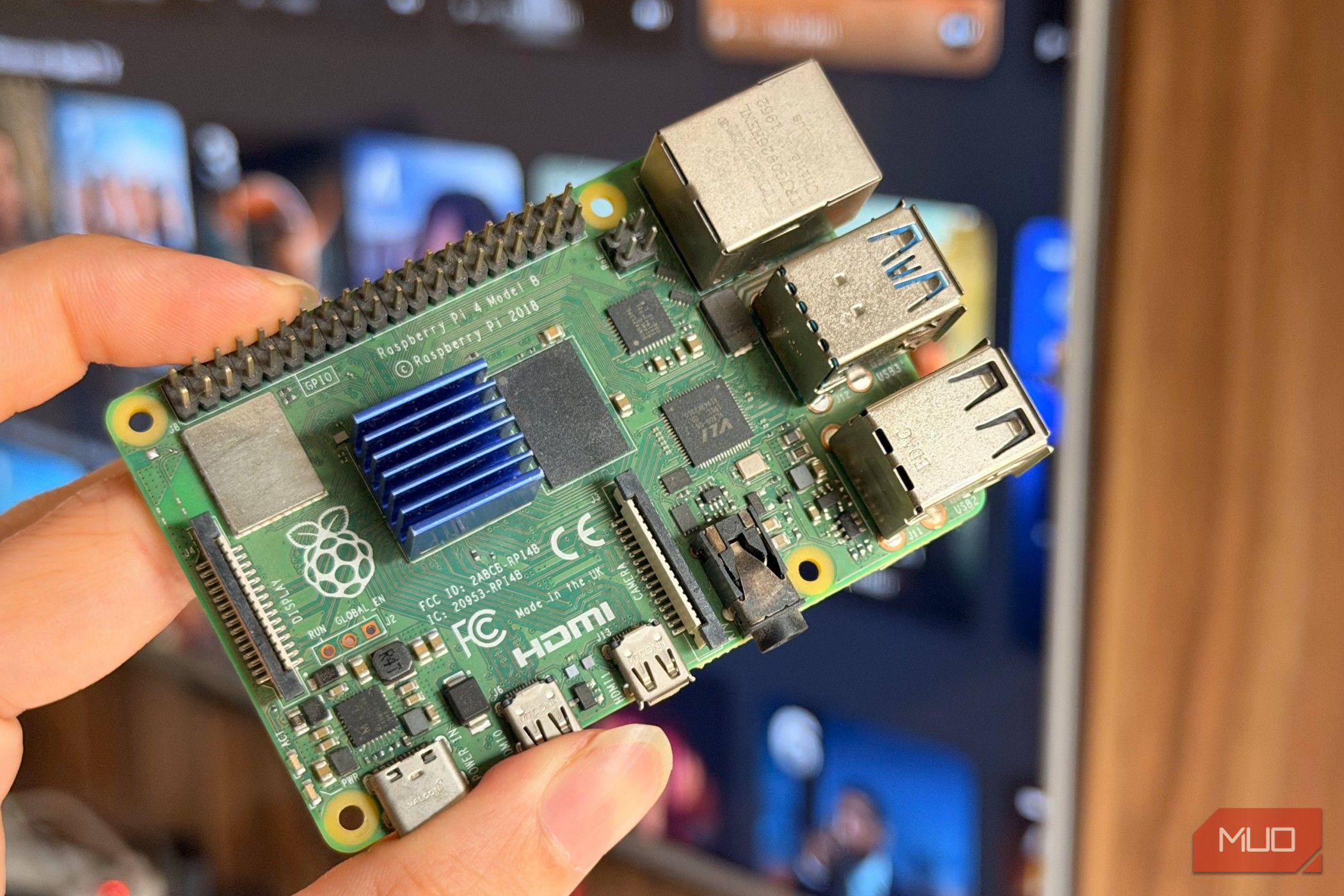
Amir Bohlooli / MUO By Yadullah Abidi Published Oct 11, 2026, 1:30 PM EDT Yadullah Abidi is a Computer Science graduate from the University of Delhi and holds a postgraduate degree in Journalism from the Asian College of Journalism, Chennai. With over a decade of experience in Windows and Linux systems, programming, PC hardware, cybersecurity, malware analysis, and gaming, he combines deep technical knowledge with strong editorial instincts. Yadullah currently writes for MakeUseOf as a Staff Writer, covering cybersecurity, gaming, and consumer tech. He formerly worked as Associate Editor at Candid.Technology and as News Editor at The Mac Observer, where he reported on everything from raging cyberattacks to the latest in Apple tech. In addition to his journalism work, Yadullah is a full-stack developer with experience in JavaScript/TypeScript, Next.js, the MERN stack, Python, C/C++, and AI/ML. Whether he's analyzing malware, reviewing hardware, or building tools on GitHub, he brings a hands-on, developer’s perspective to tech journalism. Sign in to your MakeUseOf account Add Us Like Like follow Follow followed Followed Thread Log in Here is a fact-based summary of the story contents: Try something different: Show me the facts Explain it like I’m 5 Give me a lighthearted recap A Raspberry Pi looks like the obvious starting point for a tiny home server. The board is inexpensive, compact, efficient, and supported by a huge community. Add a power supply, storage, a case, cooling, and perhaps a screen or camera, and that affordable board quickly stops being so affordable as it turns into a collection of accessories.
An old Android phone reverses that equation. It is less open and modular than any Linux box, but it arrives as a finished component. If your planned server can run through Android apps, Termux, or a Linux container, the forgotten phone in your drawer may already have the hardware you need.
Photo by Yadullah Abidi | No Attribution Required.Photo by Yadullah Abidi | No Attribution Required.Photo by Yadullah Abidi | No Attribution Required.Amir Bohlooli / MUOAmir Bohlooli / MUOClosePhoto by Yadullah Abidi | No Attribution Required.Photo by Yadullah Abidi | No Attribution Required.Photo by Yadullah Abidi | No Attribution Required.Amir Bohlooli / MUOAmir Bohlooli / MUO A typical phone boots from built-in flash storage, so there's nothing extra to insert before installing software. Even an older 64GB handset has room for a DNS sinkhole, lightweight web server, small Git repository, or personal document cloud. Some people even go further and turn the whole thing into a NAS.
A standard Raspberry Pi will require a microSD card as one of the first expenses out of the box. Raspberry Pi's setup instructions tell you to prepare a microSD card with an operating system image before inserting it and booting the board. An SSD improves speed and endurance but introduces a drive, adapter, and another cable, and that's assuming you already have one on hand. Phone storage may be non-replaceable, but for a zero-cost experiment, installed beats upgradeable.
Author Image by Ravi SinghCredit: Ravi Singh/MakeUseOf Servers are usually administered remotely, but local controls can be surprisingly useful, especially if you're starting out. A phone gives you a display, capacitive touchscreen, on-screen keyboard, buttons, and vibration feedback all in one assembly. That simplifies setup and lets the device double as a Home Assistant panel, status display, music controller, camera preview, or emergency console.
You can configure a Raspberry Pi headlessly and administer it over SSH. If the project needs a local interface however, a Pi requires a display and some method of input. Raspberry Pi's official Touch Display 2 starts at $40 for the 5-inch model, while the 7-inch version costs $60. A phone's panel is smaller, but it is already mounted, powered, and protected behind glass.
Shaun Cichacki/MUO A phone's battery also frees it from the wall socket. Connected to a suitable charger, the phone effectively gains short-term backup power. A brief outage doesn't immediately shut down your server, corrupt a write, or force every service through a cold boot. Android also reports charging state, battery status, and capacity through BatteryManager.
A Raspberry Pi needs an external supply from the start. For the Pi 5, Raspberry Pi recommends its 27W USB-C power adapter, especially when you've attached power-hungry USB drives. Battery backup requires another UPS HAT or power management board and a battery. A phone integrates charger circuitry, a battery gauge, and the rechargeable cell. That said, you should always inspect an old battery for swelling, and never leave a damaged handset plugged in. Even a healthy battery wears out faster when it sits at 100% on a charger around the clock, so don't expect it to last forever in this role.